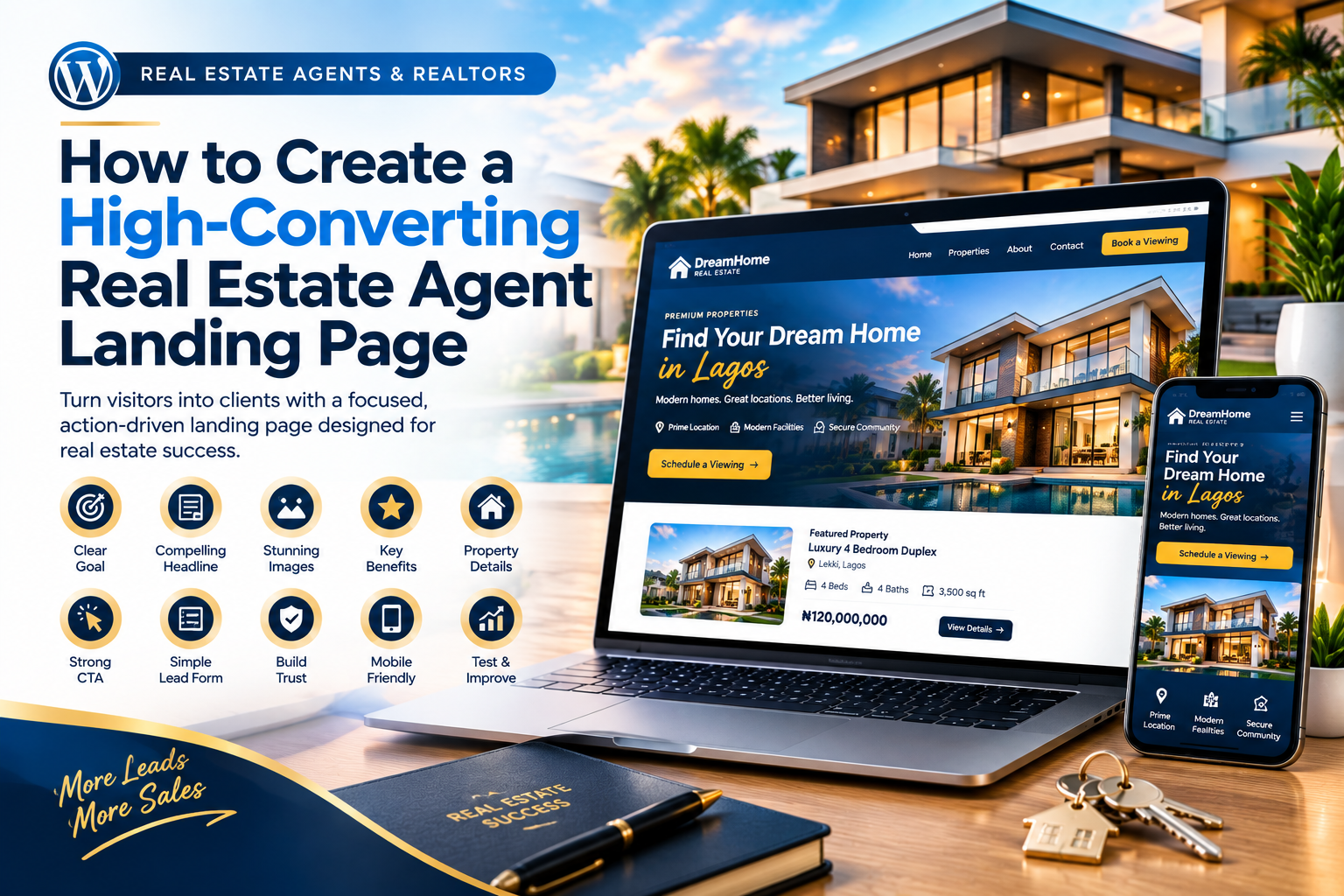
A real estate landing page is a focused webpage designed to encourage visitors to take a specific action. Unlike a general homepage, a landing page can target one service, property, location, or marketing campaign. For realtors, a well-designed landing page can help generate enquiries from potential buyers and sellers.
WordPress makes it possible to create professional landing pages without building everything from scratch. Here are important steps for creating an effective real estate landing page.
1. Define One Clear Goal
Before creating the page, decide what you want visitors to do. Your goal could be booking a property viewing, requesting property details, contacting an agent, scheduling a consultation, or submitting a property valuation request.
Keeping one primary goal helps prevent the page from becoming confusing.
2. Write a Strong Headline
The headline should immediately explain what the page offers. For example, a property campaign could use a headline such as “Find Your Dream Home in Lagos.”
A clear headline tells visitors what they can expect and encourages them to continue reading.
3. Use Professional Property Images
Real estate is highly visual, so quality images are important. Use clear photographs that show the property’s exterior, interior, key features, and surroundings.
Images should be optimized for the web so they maintain good quality without unnecessarily slowing down the page.
4. Highlight the Main Benefits
Explain why a visitor should choose the property or service. Benefits might include a desirable location, modern facilities, flexible viewing options, professional guidance, or access to suitable properties.
Use short sections and bullet points to make important information easy to scan.
5. Add Property Details
If the landing page promotes a specific property, provide useful information such as price, location, property type, bedrooms, bathrooms, size, amenities, and availability.
Providing relevant details helps potential clients decide whether they want to make an enquiry.
6. Include a Strong Call to Action
A landing page should make the next step obvious. Use clear buttons such as “Schedule a Viewing,” “Request Property Details,” “Contact an Agent,” or “Book a Consultation.”
Place the main call to action where visitors can easily see it and consider repeating it further down the page.
7. Add a Simple Lead Form
A lead form allows visitors to contact the realtor without leaving the page. Keep the form simple by requesting only information that is necessary, such as name, email address, phone number, and enquiry.
A shorter form can make it easier for interested visitors to submit their details.
8. Build Trust With Social Proof
Testimonials, client reviews, professional credentials, successful sales, and relevant experience can help establish credibility. When using testimonials, make sure they are genuine and presented accurately.
Trust elements are especially useful for visitors who are unfamiliar with the realtor.
9. Optimize for Mobile Devices
Many property searches happen on smartphones. Your landing page should therefore be responsive and easy to use on mobile devices.
Check that text is readable, images display correctly, buttons are easy to tap, and forms work properly on smaller screens.
10. Test and Improve the Page
After publishing the landing page, monitor its performance. Look at visitor activity, form submissions, enquiries, and other relevant metrics. Testing different headlines, images, calls to action, or form layouts can help identify what works better for your audience.
Conclusion
A high-converting real estate landing page should have one clear purpose and guide visitors toward taking action. Strong headlines, professional images, useful property information, clear calls to action, simple forms, trust elements, mobile-friendly design, and ongoing testing can make the page more effective. With WordPress, realtors can create focused landing pages that support property marketing and lead-generation campaigns.
Leave a Reply