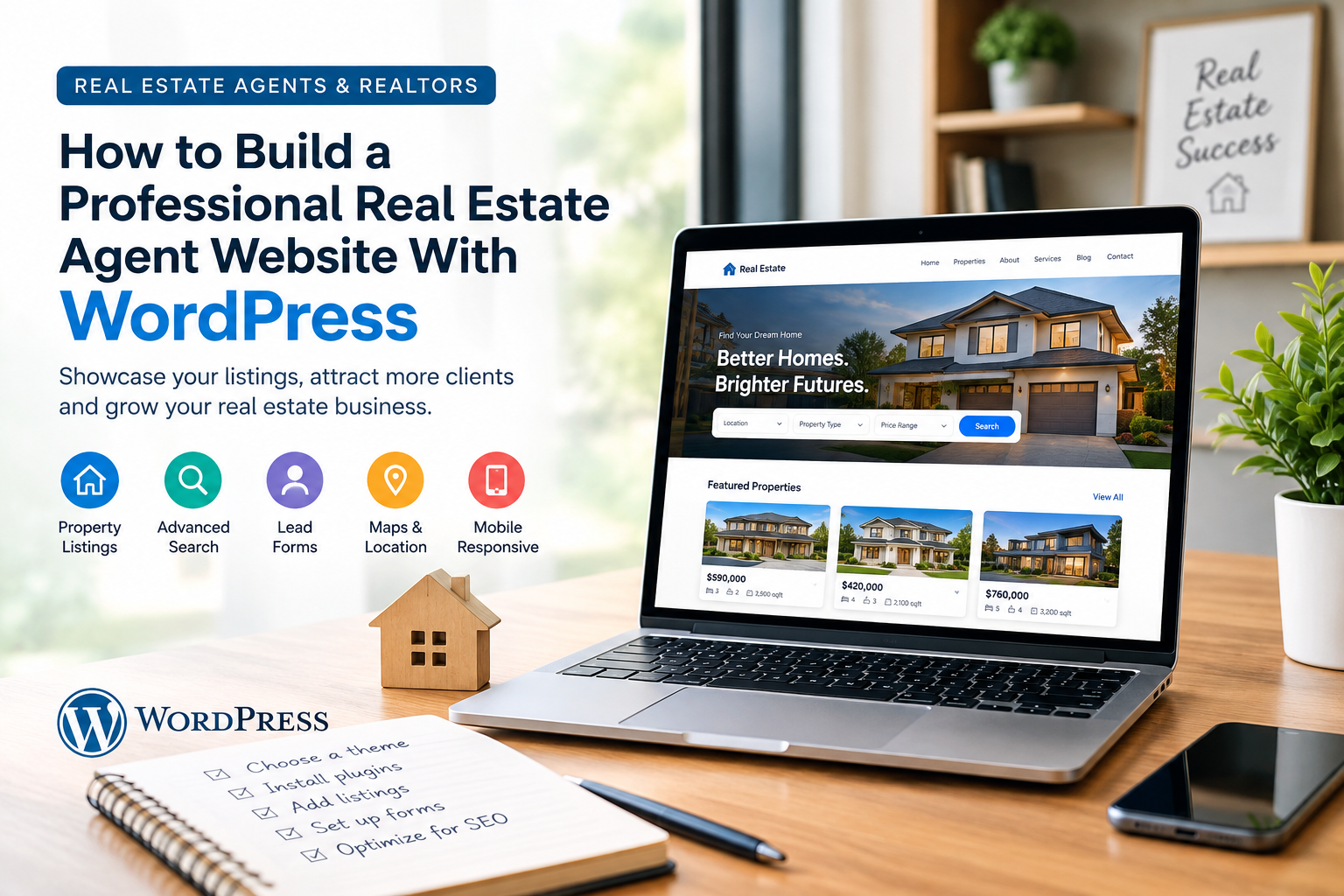
A professional website is an important digital tool for real estate agents and Realtors. It allows potential buyers and sellers to learn about an agent, view properties, submit enquiries and request appointments. Current WordPress and freelance marketplace listings show real estate websites commonly using features such as property listings, search filters, lead-capture forms, agent profiles, maps, mobile responsiveness and IDX/MLS integration.
Why Real Estate Agents Need a Website
A professional website gives an agent a central online presence instead of depending entirely on social media or third-party property platforms. It can showcase the agent’s profile, services, properties, locations served, testimonials and contact information.
Property listings are another important feature. A listing can display the property’s price, location, type, bedrooms, bathrooms, photos, description, features and enquiry options. WordPress real estate plugins can provide property listing and search functionality.
Essential Features
1. Property Search
Visitors should be able to search and filter properties according to factors such as location, price, property type, bedrooms and other available features.
2. Lead Capture
Contact forms, property enquiry forms, valuation requests and appointment forms can make it easier for visitors to contact the agent.
3. IDX/MLS Integration
Where permitted by the relevant MLS and market, IDX technology can allow eligible property listing data to appear on an agent’s website. WordPress currently has plugins and services supporting IDX/MLS-related functionality.
4. Agent Profile
An agent page can include a professional photo, biography, experience, service areas, specialties, listings and contact details.
5. Maps
Maps can help visitors understand property locations and the areas served by an agent.
6. Mobile-Friendly Design
The website should work properly on smartphones, tablets and computers. Property images, navigation, search tools and contact forms should remain easy to use on smaller screens.
7. SEO
Agents can create useful pages around their services, property types and locations. For example, pages such as “Homes for Sale in [Location]” can help organize information for visitors and search engines.
Important Website Pages
A professional real estate website can include:
- Home
- About the Agent
- Properties
- Property Details
- Services
- Areas Served
- Testimonials
- Blog
- Contact
How to Build It
Start by defining the website’s purpose and target audience. Choose a professional domain, reliable WordPress hosting and a responsive theme. Install the required real estate functionality, create property listings, add enquiry forms and configure appropriate SEO settings.
If the agent requires MLS/IDX, confirm the requirements and permissions of the relevant MLS before selecting an integration. WordPress currently provides several real estate and IDX-related plugins, including solutions for property listings, searches, maps and MLS connections.
Common Mistakes to Avoid
Avoid creating a website that focuses only on the agent instead of the visitor. Make properties and contact options easy to find. Do not overload the website with unnecessary features, ignore mobile users, use poorly optimized images or hide enquiry forms.
Conclusion
A professional real estate agent website should combine attractive design with useful business functionality. Property listings, search, lead capture, mobile responsiveness, maps, SEO and appropriate MLS/IDX integration can help create a useful online platform for an agent.
The current WordPress ecosystem and freelance marketplaces show that these functions are actively used in real estate website projects. For WordPress students, real estate is therefore a useful niche for learning how to build websites around specific business needs rather than simply creating attractive pages.
Leave a Reply