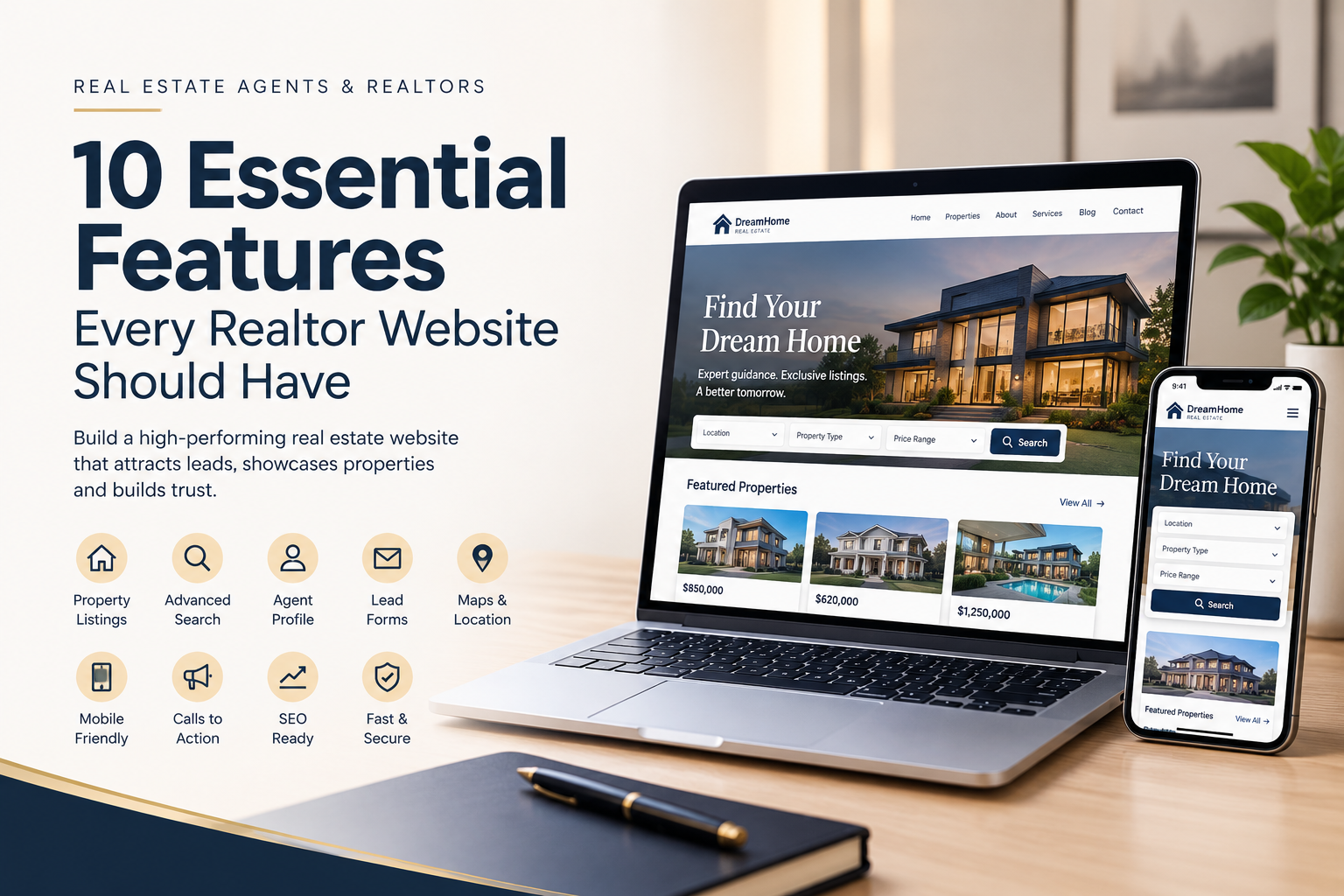
A professional realtor website is more than an online business card. It should help real estate agents showcase properties, attract potential buyers, capture leads, and make it easy for visitors to take action. With WordPress, realtors can create websites with features designed specifically for property marketing and lead generation.
Here are 10 essential features every realtor website should have.
1. Property Listings
A realtor website should have a dedicated section for available properties. Each listing should include important information such as property images, price, location, bedrooms, bathrooms, property type, and a detailed description. Well-organized listings make it easier for visitors to compare properties.
2. Advanced Property Search
Visitors should be able to quickly find properties that match their needs. Search and filtering options can include location, property type, price range, bedrooms, bathrooms, and other important criteria. A good search system improves the user experience and helps buyers find relevant listings faster.
3. Lead Capture Forms
Generating enquiries is one of the main purposes of a realtor website. Contact forms, property enquiry forms, and consultation forms allow visitors to send their information directly to the agent. Forms should be simple and easy to complete on both desktop and mobile devices.
4. Agent Profile
A professional agent profile helps build trust. It can include the realtor’s photo, biography, experience, areas served, contact information, and property specialties. Adding testimonials can also help demonstrate previous client experiences.
5. High-Quality Property Images
Real estate is highly visual, so attractive property photography is essential. High-quality images can make listings more appealing and encourage visitors to explore properties further. Images should also be optimized so they do not slow down the website.
6. Location Maps
Maps help potential buyers understand where a property is located. A realtor website can display property locations and nearby attractions such as schools, shopping centers, transportation, and other useful facilities.
7. Mobile-Friendly Design
Many property searches take place on smartphones. A realtor website should therefore work smoothly across phones, tablets, and computers. Buttons, menus, images, forms, and property listings should remain easy to use on smaller screens.
8. Clear Calls to Action
Every important page should guide visitors toward the next step. Calls to action such as “Schedule a Viewing,” “Request Property Details,” “Contact Agent,” or “Book a Consultation” can make it easier for potential clients to take action.
9. SEO-Friendly Structure
Search engine optimization can help realtors attract people searching for properties and real estate services online. Important basics include descriptive page titles, useful content, optimized images, location-based keywords, and a clear website structure.
10. Fast and Secure Website
Website speed and security are important for both users and business credibility. A realtor website should use reliable hosting, optimized images, secure connections, regular updates, and appropriate WordPress security practices.
Conclusion
A successful realtor website should combine attractive design with useful functionality. Property listings, advanced search, lead forms, agent profiles, maps, mobile responsiveness, SEO, and strong calls to action can turn a basic website into a practical real estate marketing tool. By focusing on these essential features, realtors can create a website that provides a better experience for property buyers while supporting their business goals.
Leave a Reply